
Verticals
One platform, applied to the environment you actually operate.
These are not six product editions, six licences or six templates. They are six ways of describing the same platform, because the thing that differs between a substation and a process unit is your architecture and your vocabulary, not the software that carries them.
- One model: Sites, Zones, Subzones, Conduits and Communication Channels
- Your terminology and your OT Domains, defined by you rather than chosen from a list
- The same assessments, findings, evidence, remediation and reports in every sector
- Honest labels: what is demonstrated, what is configurable, what is planned
Why one platform
The sector changes what you call things. It does not change the model.
A distribution utility, a bulk terminal and a refinery describe their estates in vocabularies that have almost nothing in common. What they share is the shape of the problem: physical locations, security zones that may nest, relationships between those zones, and the specific things each relationship carries.
That is why OTReady has one canonical model rather than a product per sector. Your sector determines the names, the domains, the consequences and the regulatory context you work under. It does not determine whether the platform can hold them.
A sector page therefore shows the same platform against a different estate. Where we have built and reviewed a full working demo, the page says so. Where the platform is configurable but no demo estate exists, the page says that instead, and the screenshots on it are labelled as illustrative configuration rather than as a demonstrated deployment.
- One canonical architecture model across every sector
- Customer-defined OT Domains, terminology and sector context
- The same assurance, remediation and reporting capabilities everywhere
- No sector is a degraded mode of another
What travels with you
Everything sector-specific is yours, and it is carried, not assumed.
OTReady holds no built-in industry template. These are the places your environment enters the model, and in each of them the content is yours.
- OT context
- Your sector, sub-sector, entity type and the consequences that matter on your site. Recorded once and read everywhere.
- Architecture
- Your Sites, Zones, Subzones, Conduits and Communication Channels, drawn by you or imported from the spreadsheet you already keep.
- Terminology and OT Domains
- Your own functional structure, in your own words. Add, rename, nest and reorder them; nothing in the product depends on a fixed list.
- Risk and targets
- A confirmed baseline for the project and confirmed targets per zone or conduit, each recorded as a deliberate decision.
- Assessments
- IEC 62443-3-2 and 3-3, the NIS2 Quick Scan and NIS2 Full Readiness, run against your architecture rather than a generic checklist.
- Findings, evidence and remediation
- Findings attributed to the object they concern, evidence attached where it is used, and remediation tracked to a decision.
- Reporting
- Issued reports that freeze what they said on the day they were issued, in every sector, from the same builders.
One model
The same architecture view, whatever the estate is made of.
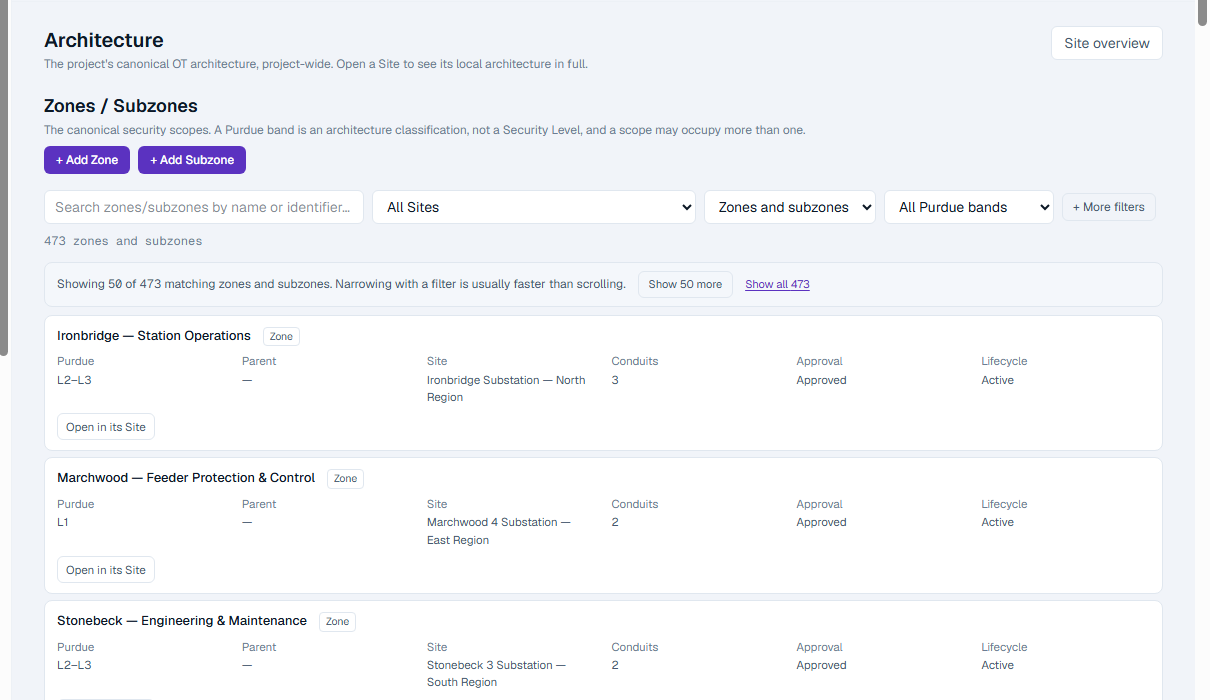
The six
Choose the environment closest to yours.
Each page shows the same platform against a different estate, with real product screenshots and a truthful label for what exists today.
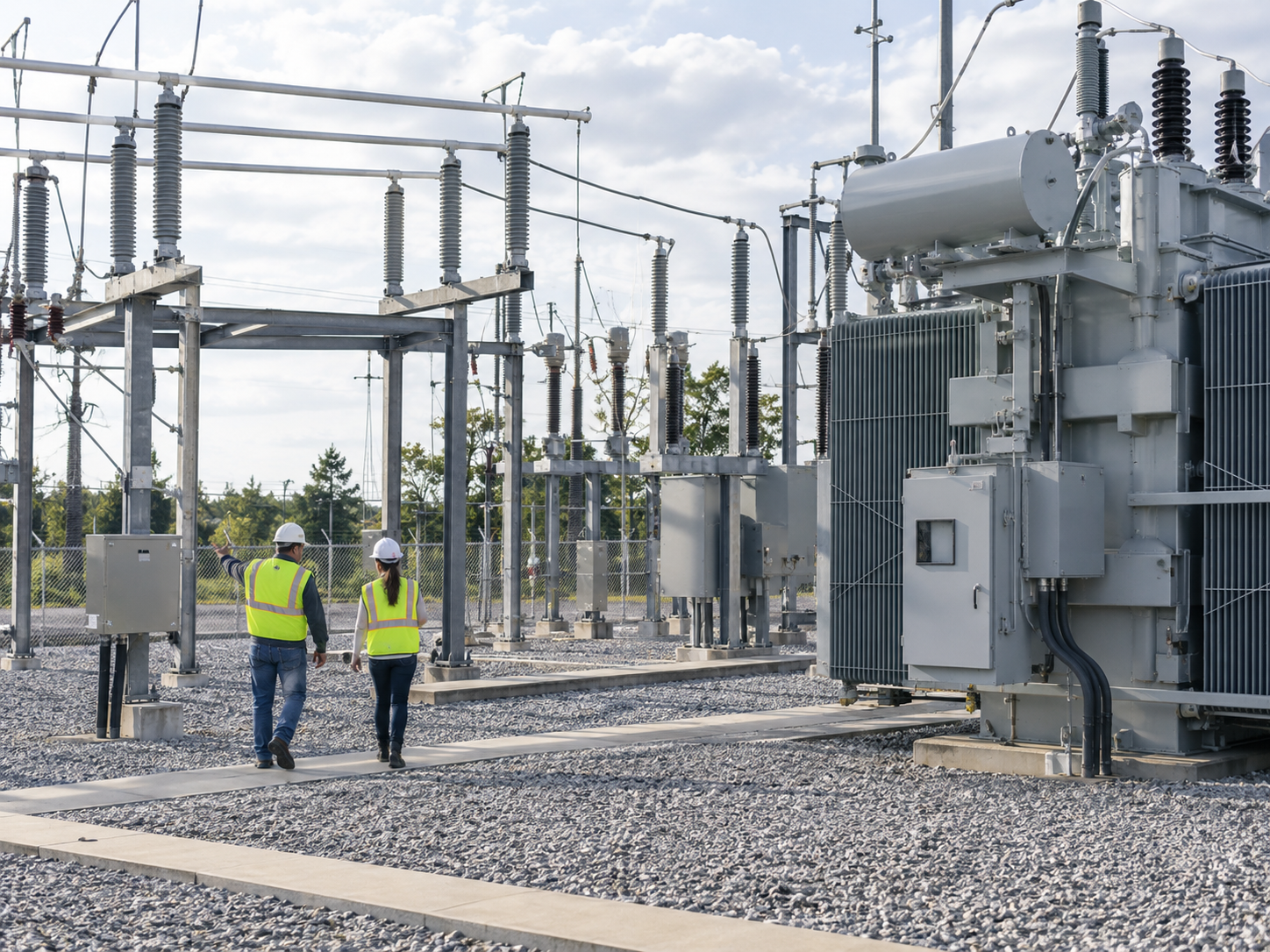
Utilities
Available use case / demoSubstations, regional distribution and utility OT environments.

Manufacturing
Available use case / demoProduction lines, cells and plant-wide OT environments.

Process Industries
Configurable todayContinuous and batch process environments across refining, petrochemical, chemical and related industries.

Material Handling & Ports
Available use case / demoTerminal, crane, conveyor, yard and material-handling operations.
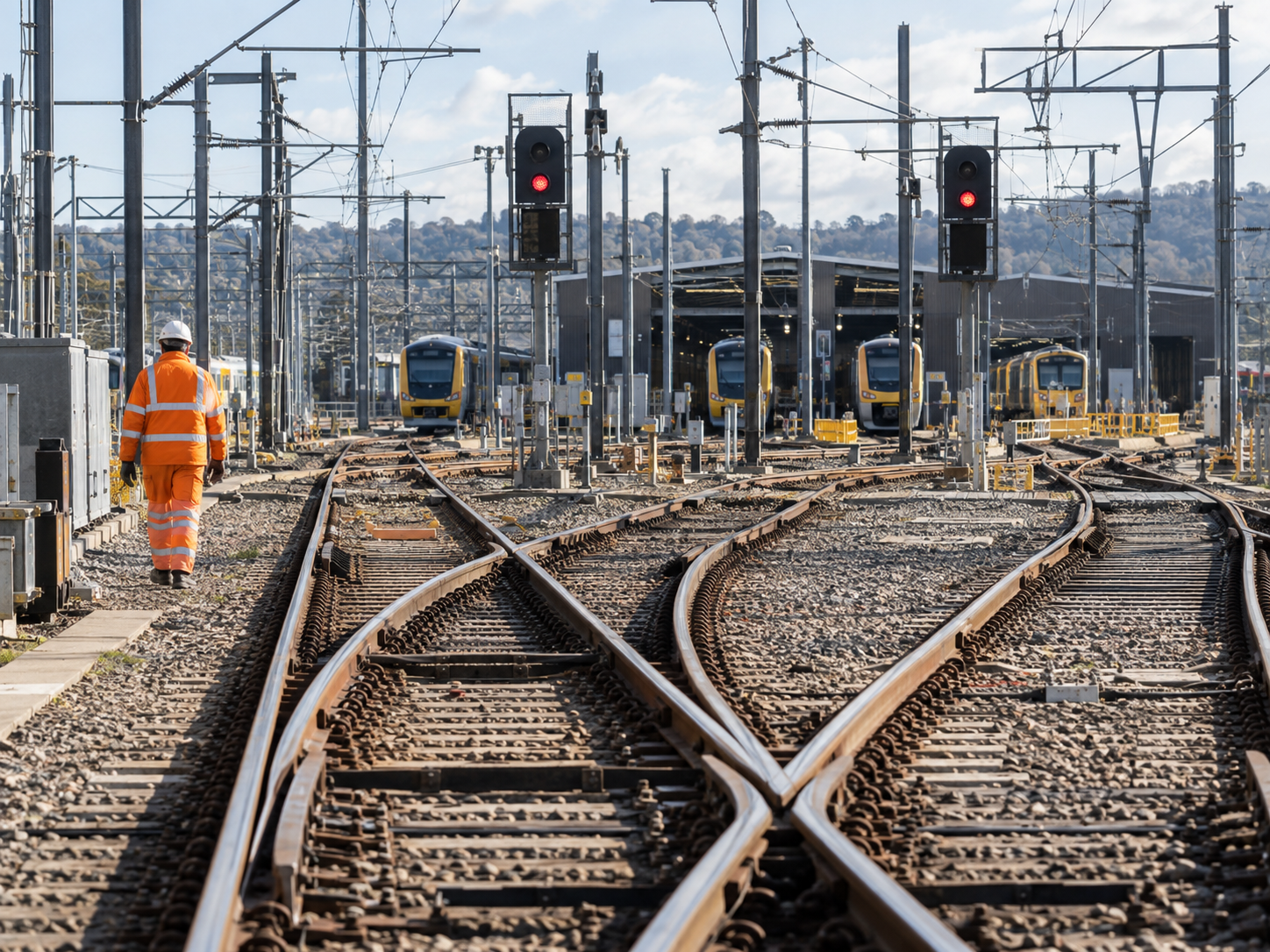
Rail
Configurable todayDedicated rail accelerator: plannedRail infrastructure, depots and distributed operational environments.

Your industry / Custom OT environment
Configurable / availableCustomer-defined OT structures and terminology without forcing a predefined sector model.
If none of them is yours, that is a supported answer.
A custom OT environment is not a fallback or a degraded mode. It is the same platform with nothing assumed about your sector: start blank, define your context and your domains, build or import your architecture, and run exactly the same assessments, assurance, remediation and reports as any other project.
Where the detail lives
The platform
What OTReady is, end to end, independent of any sector.
OT architecture
The canonical model every sector page is built on.
Reports
What you can issue, and what an issued version guarantees.
See OTReady against your own estate.
A working session on your architecture, in your vocabulary, whichever of these is closest to what you operate.